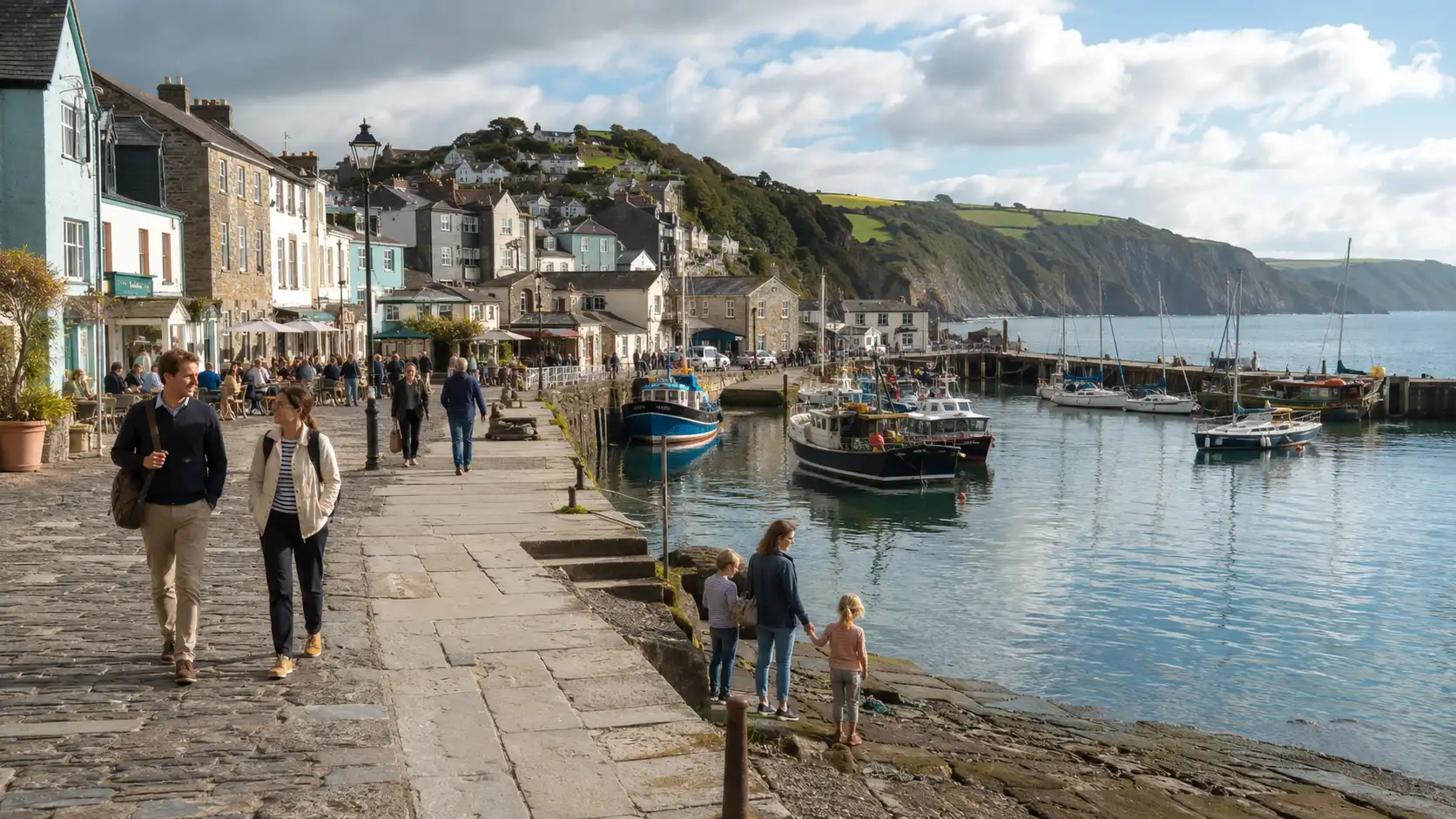
The South West of England has a distinctive combination of coastline, countryside, historic towns, modern cities and growing economic opportunities. From Cornwall and Devon to Somerset, Dorset, Gloucestershire, Wiltshire and the Bristol area, the region offers very different lifestyles within one part of the country.
For residents, the appeal often comes from having attractive natural surroundings within reach of established towns and employment centres. For businesses and professionals, the South West combines traditional industries with expanding technology, creative, aerospace, marine and green-economy sectors. Visitors, meanwhile, have access to beaches, national parks, historic cities, cultural attractions and some of England’s best-known rural landscapes.
These different strengths help explain why the South West continues to appeal to people looking for somewhere to live, develop a career, establish a business or simply enjoy a memorable break.
Why Is the South West a Great Place to Live?

Quality of life is one of the region’s strongest attractions. The South West contains large rural areas and long stretches of coastline alongside major urban centres, giving residents a wide choice of environments. Government research has previously found particularly strong local-area satisfaction in the region, with 79% of adults in the South West reporting satisfaction with their local area in the 2023/24 Community Life Survey.
Access to Coast and Countryside
Few regions of England provide quite the same variety of landscapes. Cornwall is famous for its rugged coastline, beaches and fishing communities, while Devon combines beaches, countryside, historic settlements and outdoor activities. VisitBritain describes Cornwall and the Isles of Scilly as being renowned for their countryside and striking coastline, while Devon alone has more than 120 sandy beaches.
Residents can also explore landscapes around Dartmoor and Exmoor, the hills and countryside of Somerset, and Dorset’s internationally recognised Jurassic Coast.
This access to outdoor space can make walking, cycling, surfing, sailing and other activities part of everyday life rather than something reserved for occasional holidays.
The South West Offers Different Ways of Living
Another advantage is variety. Someone wanting an energetic city environment might choose Bristol, while Bath provides a smaller historic-city experience. Exeter and Plymouth combine employment, education and urban services with relatively easy access to Devon’s countryside and coast.
Smaller towns and villages provide a different option again. Market towns, coastal communities and rural settlements can appeal to families, retirees, remote workers and people looking for an alternative to living in one of Britain’s largest metropolitan areas.
However, living in the South West is not automatically inexpensive or convenient everywhere. Housing affordability can be challenging in desirable coastal and city locations, while transport options can be more limited in remote rural communities. The best location therefore depends heavily on employment, budget and lifestyle requirements.
What Makes the South West Attractive for Work?
The South West should not be viewed purely as a tourism and retirement destination. It has a diverse economy with established and emerging industries.
Government investment information highlights regional strengths in cyber security, green technology, aerospace, marine and defence technologies. The region also contains more than 20 centres of excellence and eight universities, helping support research, skills and business development.
| Area or sector | Why it matters |
|---|---|
| Technology and cyber security | Supports skilled digital and innovation roles |
| Aerospace and advanced manufacturing | Long-established regional expertise and supply chains |
| Marine and defence | Particularly important around Plymouth and coastal centres |
| Creative industries | Strong presence around Bristol and other urban areas |
| Green technology | Growing opportunities connected with clean energy and sustainability |
| Tourism and hospitality | Major employer across coastal and rural destinations |
| Education and research | Universities support skills, research and innovation |
This economic variety means employment opportunities are spread across different sectors rather than being concentrated entirely in tourism.
Bristol and Other Cities Support a Modern Economy
Bristol is particularly important to the South West’s economic identity. It has developed a strong reputation in technology, aerospace, creative industries, media and professional services while retaining an independent cultural character.
Elsewhere, Exeter acts as an important commercial and educational centre for Devon, while Plymouth has significant strengths in marine, defence and advanced engineering. Smaller centres contribute through manufacturing, agriculture, food production, tourism, professional services and growing independent business communities.
The result is a regional economy that combines highly specialised industries with the small and medium-sized businesses that support local communities.
For people following regional business developments, local culture, destinations and community stories, South West Mag provides another way to explore what is happening across this varied part of England.
Can the South West Support a Better Work-Life Balance?
One reason professionals may consider the South West is the possibility of combining career opportunities with easier access to outdoor activities and smaller communities.
Remote and hybrid working have also made location more flexible for some occupations. A professional may no longer need to live close to a large corporate headquarters five days a week, potentially making towns and cities outside London and the South East more practical.
The experience varies considerably, however. Bristol and other employment centres can still experience congestion and high housing demand, while rural workers may face longer journeys.
Transport investment remains important to the region’s future. The West of England’s 2026 transport vision, for example, connects improved transport with access to jobs, economic growth and better links between communities.
Why Is the South West Such a Popular Place to Visit?
Tourism is central to the South West’s identity and economy. Torbay Council’s 2026–2036 Destination Management Plan reports that tourism generated around £11.1 billion in economic output across the South West in 2024 and supported approximately 194,000 jobs.
Part of the attraction is the sheer diversity of possible trips.
Visitors can spend a weekend exploring Bristol’s food, music and creative culture, discover Bath’s Roman and Georgian heritage, walk across Dartmoor, visit seaside communities in Devon, surf in Cornwall or explore Somerset’s countryside.
Historic Cities and Towns Add Another Dimension
Bath is one of the region’s most internationally recognisable destinations. Its Roman heritage and Georgian architecture make it significantly different from the South West’s coastal attractions, while its relatively compact centre makes much of the city practical to explore on foot.
Bristol provides another contrast with street art, museums, music, independent businesses and a strong creative identity. VisitBritain also highlights Bristol as part of Lonely Planet’s Best in Travel 2026 selection.
Beyond the major cities, historic market towns, harbours and villages allow visitors to experience the region at a slower pace.
Food and Local Produce Strengthen the Experience
The South West also has a strong connection with food and drink. Coastal communities have access to seafood, while rural counties support farming, dairy production and independent producers.
Somerset is particularly associated with local produce and farmers’ markets, while Devon and Cornwall have strong culinary identities of their own.
Independent cafés, pubs, farm shops, restaurants and food festivals help connect tourism with local businesses. This gives visitors opportunities to experience regional products while supporting the communities they are visiting.
Is the South West Easy to Explore?
Major destinations are connected by road and rail, although travel becomes more dependent on cars and local transport in remote areas.
Direct rail connections link London with locations including Bristol, Bath, Exeter, Devon and Cornwall. VisitBritain also notes extensive train, coach, bus and ferry connections around the South West.
For visitors, choosing one area rather than trying to cover the entire region can often create a better trip. Cornwall alone can fill a week, while Bath and Bristol can work well together for a shorter city-focused break.
What Ultimately Makes the South West Special?
The strongest feature of the South West may be that it does not depend on one single attraction.
It offers major cities without losing its rural character. It has internationally recognised visitor destinations alongside working towns and communities. Traditional sectors operate alongside technology, advanced manufacturing, creative industries and green innovation. Historic architecture can be found within relatively short journeys of beaches, moorland and countryside.
There are challenges, including housing affordability, seasonal tourism pressures, transport limitations in rural locations and economic differences between communities. Government analysis itself notes that prosperity is not distributed evenly across what is England’s largest and most geographically dispersed region.
Yet that diversity is also one of the South West’s greatest strengths.
Final Thoughts
The South West is a great place to live, work and visit because it brings together opportunities that are often separated elsewhere. Residents can enjoy cities, coast and countryside; professionals can access established and emerging industries; businesses can draw on universities, specialist skills and growing innovation clusters; and visitors can experience everything from historic architecture to beaches and national parks.
Whether someone is considering relocation, developing a career, building a business or planning a short break, the South West offers a broad range of possibilities. Its combination of natural beauty, cultural identity, economic potential and distinctive communities ensures that the region remains one of the most interesting and attractive parts of England.